

Product Strategy
Designing Utility Tools Developers Actually Keep Using
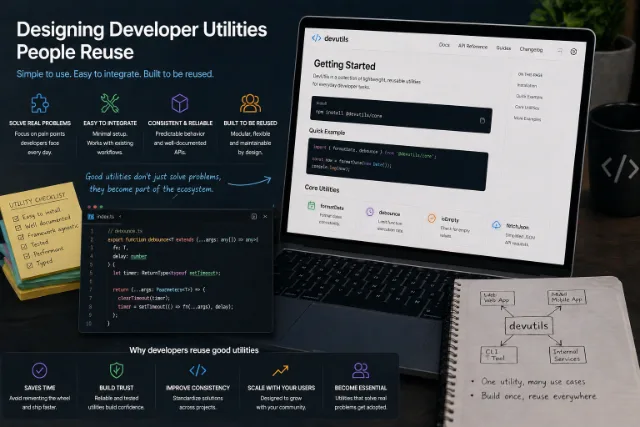
5 min read · March 2026
Author
ByteVera Digital Owner
Last updated: March 2026
Developers keep using tools that reduce friction immediately. Fancy interfaces do not compensate for slow output, unclear results, or hidden controls.
Speed and clarity beat feature volume
The first interaction should be obvious and quick. Show output instantly and keep the default mode useful for most users.
Error states should explain what failed and what to fix next. Avoid silent failures or generic messages.
Local-first trust model
For utility tools, local processing is a trust advantage. It lowers privacy concerns and improves perceived responsiveness.
Persisting user preferences locally makes repeat tasks feel effortless.
Connect tools into workflows
A strong utility page should suggest the next logical tool so users can continue work without searching again.
Cross-linking related tools increases session depth and creates a practical ecosystem instead of isolated pages.
Related developer tools
Continue with practical tools related to this topic.