

Engineering Process
How We Build Fast, Reliable Product MVPs in 6 Weeks
8 min read · April 2026
Author
ByteVera Digital Owner
Last updated: April 2026
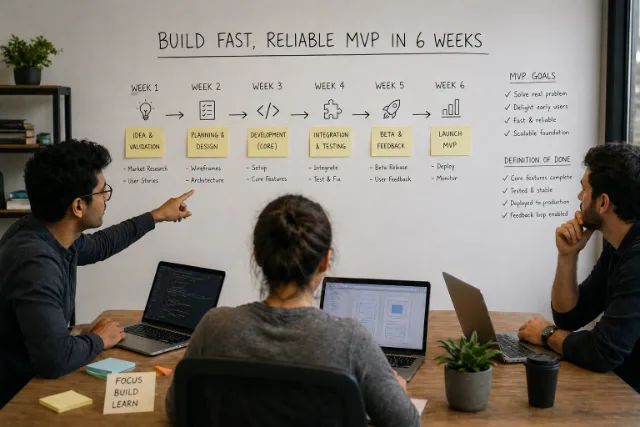
Shipping an MVP quickly is not just about writing code faster. The real challenge is deciding what to build, what to delay, and how to keep quality high while time is short. Our six-week MVP format is designed to reduce avoidable rework while still moving at startup speed.
Week 1: Define outcomes, scope, and constraints
We start with user outcomes, not features. The team aligns on one core workflow that must work end to end before launch. This helps avoid a fragmented release where many features exist but no complete user journey is production ready.
Architecture decisions are kept intentionally small. We only choose services and patterns needed for immediate stability and clear growth for the next milestone.
Weeks 2-4: Build in vertical slices
Each sprint produces complete slices including UI, API, validation, and telemetry. This creates early confidence because every week ends with testable behavior, not partial modules.
We include quality gates from the first commit: linting, unit tests, and basic performance checks. This keeps speed sustainable and reduces launch-week surprises.
Weeks 5-6: Hardening and launch readiness
The final phase focuses on stability and operational readiness: access controls, error handling, analytics events, and clear runbooks for incident response.
The MVP ships with a focused backlog for post-launch learning. Teams should treat release day as the start of measurement, not the end of delivery.
Related developer tools
Continue with practical tools related to this topic.